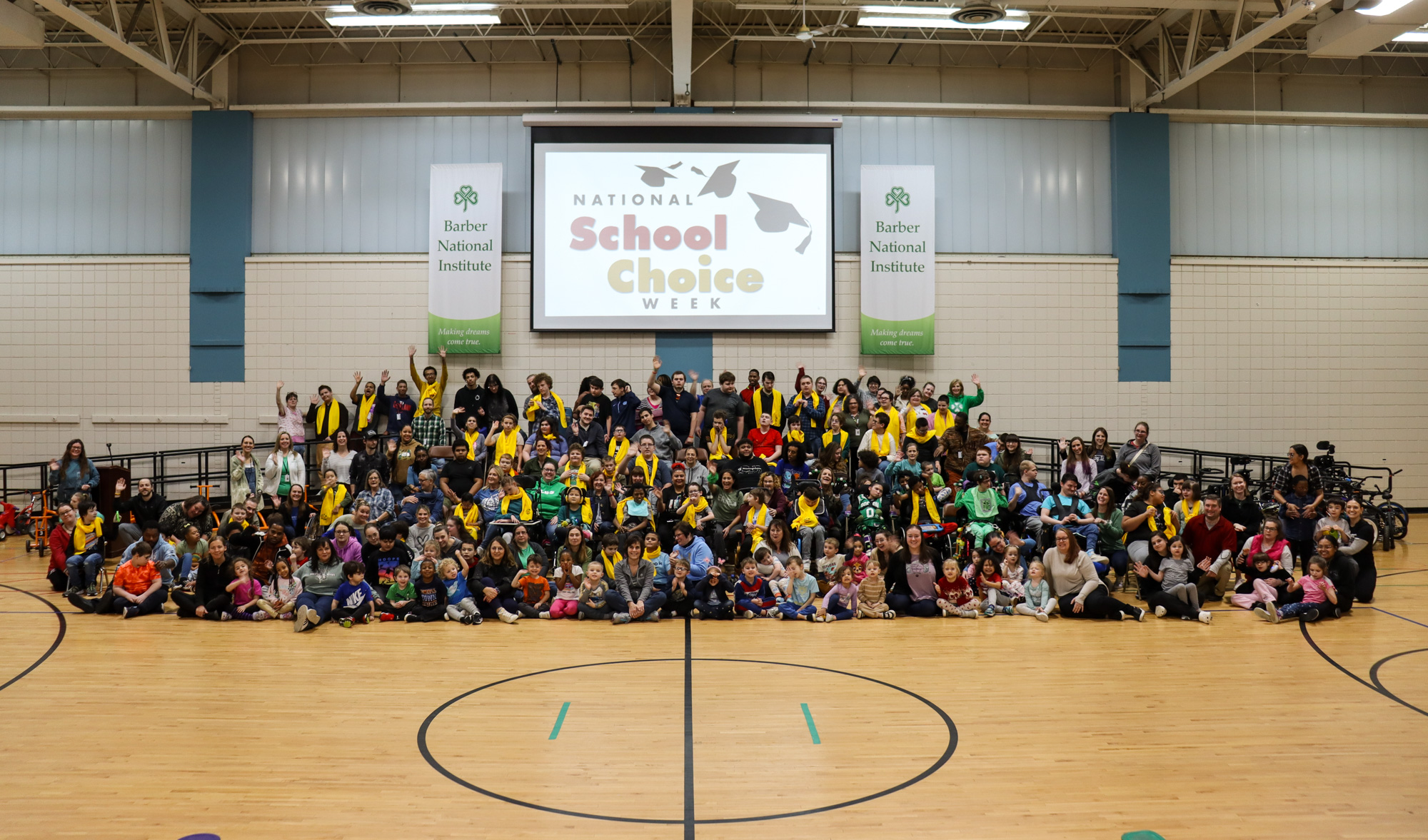
Each year, National School Choice Week shines a bright spotlight on one powerful idea: every child deserves access to an education that meets their unique needs.
At the Elizabeth Lee Black School at the Barber National Institute, School Choice Week is more than a national celebration—it is a daily reality and a deeply held commitment.
What School Choice Week Represents
National School Choice Week is the largest annual celebration of opportunity in education, highlighting the wide range of options available to families, including public schools, private schools, charter schools, magnet programs, and specialized education settings. At its heart, School Choice Week recognizes that there is no one-size-fits-all approach to learning.
For students with disabilities and complex learning needs, having choices is especially important. The right educational setting can unlock confidence, independence, communication, and lifelong skills. School Choice Week reminds us that families deserve the freedom to choose schools that honor their children’s abilities, celebrate their individuality, and support their growth.
Finding Their Place at Elizabeth Lee Black School
The Elizabeth Lee Black School exemplifies what it means to help students “find their place.” As part of the Barber National Institute, the school provides a highly specialized, student-centered educational environment designed to meet learners where they are—and help them go further than they ever imagined possible.
At Elizabeth Lee Black School:
Instruction is individualized and purposeful
Students are supported by skilled, compassionate educators and therapists
Learning extends beyond academics to include life skills, communication, and independence
Each student’s strengths, interests, and goals shape their educational experience
Families who choose Elizabeth Lee Black School do so because they are seeking more than a classroom—they are seeking a community that understands their child, values inclusion, and believes in possibility.
Why School Choice Matters
School Choice Week highlights an essential truth: when families are empowered to choose the right school, students succeed. Choice allows families to find environments that align with their child’s learning style, medical needs, social development, and emotional well-being.
For the Elizabeth Lee Black School, choice means creating space where students feel safe to learn, supported to grow, and proud of who they are. It means fostering independence, celebrating progress—big and small—and partnering with families every step of the way.
Celebrating Our Students, Families, and Educators
During School Choice Week, we celebrate:
Students, whose determination and resilience inspire us every day
Families, who advocate tirelessly for the best opportunities for their children
Educators and staff, whose dedication transforms classrooms into places of belonging and growth
Their combined efforts create an environment where students don’t just attend school—they belong.
Looking Ahead
As we celebrate School Choice Week, we recommit ourselves to the belief that every student deserves the chance to learn in a setting where they are understood, valued, and supported. At the Elizabeth Lee Black School at the Barber National Institute, school choice is not just a policy—it is a promise.
A promise to meet students where they are. A promise to help them find their place. And a promise to believe in what they can achieve.
At the Elizabeth Lee Black School (ELBS), Barber National Institute, every hallway tells a story—and every staff member helps write it. Rooted in the legacy of its founder, Dr. Gertrude A. Barber, ELBS is a place where compassion meets innovation, and where educators and support professionals come together to “make dreams come true” for students and families.
From your very first day, you’ll experience a school culture that is intentionally crafted: supportive, dynamic, collaborative, and deeply human. This isn’t just a workplace. It’s a community—a place where your work matters, your ideas matter, and you matter.
A Culture That Feels Like Family
Ask anyone at ELBS what makes this school special, and the answer comes quickly: the people. Staff consistently describe the culture as family‑oriented, team‑driven, and grounded in genuine support. One staff member shared how the encouragement of teachers, therapists, paraprofessionals, and administrators inspired them to return to school to become a special education teacher—so they could continue teaching at ELBS.
That sense of belonging is woven into every part of the school day—from the way colleagues collaborate on how leaders make themselves available to support new and seasoned staff alike.
A Place to Grow, Learn, and Lead
Growth isn’t just possible at ELBS—it’s expected and nurtured.
Whether you’re new to the field or a seasoned educator, ELBS offers:
Opportunities to expand your skills
Mentorship from supportive colleagues
Access to professional development
Encouragement to bring forward your ideas, creativity, and authentic voice
“Be engaged,” the school encourages. Stay curious. Ask questions. Share your thoughts. At ELBS, your input isn’t just welcomed—it’s celebrated as part of a shared commitment to continuous improvement.
Supportive Teams and Open‑Door Leadership
Your work team is your backbone here—colleagues who help you navigate challenges, celebrate successes, and stay grounded when the days get busy. Supervisors take an active role in helping staff feel prepared, confident, and connected.
The leadership team remains visible, approachable, and deeply committed to supporting every staff member.
A Mission That Inspires Every Day
The heart of ELBS beats for its students.
The school is known for providing:
Innovative, research‑based strategies
Individualized programming
Collaborative problem solving
A joyful, uplifting learning environment
Here, you make a real difference—and you feel that difference every day. ELBS staff change lives, support families, and help students thrive in ways that remain unforgettable.
Why Work at ELBS?
Because here, you belong. Because here, your work has purpose. Because here, you’ll join a team committed not only to students’ success—but to your success, too.
Whether you’re beginning your career, seeking a meaningful change, or continuing your growth in special education, the Elizabeth Lee Black School, Barber National Institute welcomes you with open arms, open minds, and open hearts.
One of the most exciting initiatives at the Elizabeth Lee Black School in 2025 was the opening of the new adaptive kitchen—a fully accessible culinary learning space designed to empower students of all abilities. Funded through a grant from the Edith L. Trees Charitable Trust and proceeds from the 2024 Ladies Only Luncheon, many of the appliances have a large, topple-free base, allowing students to pull on them without moving the appliance or risking injury. All touchpoints are highlighted in gold, guiding them to learn about appliance safety. It’s not just a kitchen—it’s a gateway to independence, confidence, and community inclusion. The adaptive kitchen has received much use since its opening, allowing students to diversify their skills and enjoy a variety of foods, including a full course Thanksgiving dinner that was guided by our speech, occupational, and physical therapy teams.
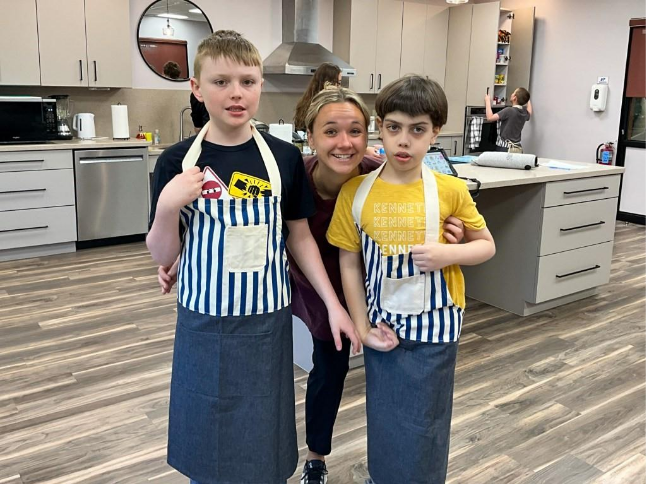
Teacher Brianne Egelston poses with two of her students in the new adaptive kitchen.
AI’s Impact on Early Childhood Development & Growth
In mid-October, I had the privilege of attending the Fall 2025 Grow Up Great Council Meeting in Pittsburg, and I left inspired and informed. A key focus of our recent meeting was the emerging role of Artificial Intelligence (AI) in the lives of young children. While AI’s impact on the workforce and older students is widely discussed, its influence on early childhood development is just beginning to surface.
Dr. Dana Suskind led a thought-provoking session on how AI devices may soon replace tablets and television as digital companions for children. With 75% of three-year-olds already using tablets, the implications are profound. During the first three years of life, a child’s brain grows to 80% of its adult size, making this a critical window for development. Rich, responsive conversations with caregivers are essential for language acquisition, emotional growth, and social engagement.
Yet, interactive AI bots and toys are on the horizon. OpenAI’s recent partnership with Mattel aims to introduce age-appropriate AI toys to the market. Dr. Suskind cautioned, “We still don’t fully understand foundational brain development. Introducing young brains to responsive AI may alter them in fundamental ways we cannot yet anticipate.”
AI is here to stay—but so is our responsibility to ensure it enhances, rather than hinders, the developmental journey of our youngest learners. As we move forward, we must continue asking hard questions and seeking evidence-based answers to protect and empower the next generation.
Retirement of Cindy Priester & Welcoming of Christoper Boyd
Cindy Priester, Director of Children & Youth, retired on December 19, after over 40 years of service to the Barber National Institute. Serving in many capacities throughout the school, including occupational therapist, special education supervisor, and ultimately the Director of Children & Youth, a position she held for the last several years. Christopher Boyd was hired as the new Director in the last months of Cindy’s employment, allowing them to collaborate and create a plan for success. Chris has demonstrated strong leadership coupled with valuable experience, skills, and education. From 2018–2025, his roles have included Vice Principal at the Northwestern School District, Principal of the Charter School of Excellence Skills Center, and most recently served as Educational Principal/Program Director of Operations at NeuroRestorative’s Adolescent Residential Treatment Facility. He has been recognized for designing creative curricula, strengthening teacher evaluation and professional development, ensuring compliance and fiscal stewardship, and leading accountability initiatives. Equipped with a K–12 Principal Certification and an M.Ed. in Curriculum & Instruction from Gannon University, plus teaching credentials in Business/Computers/IT, he brings a solid academic foundation to our school and organization.
Artist in Residence Program Updates
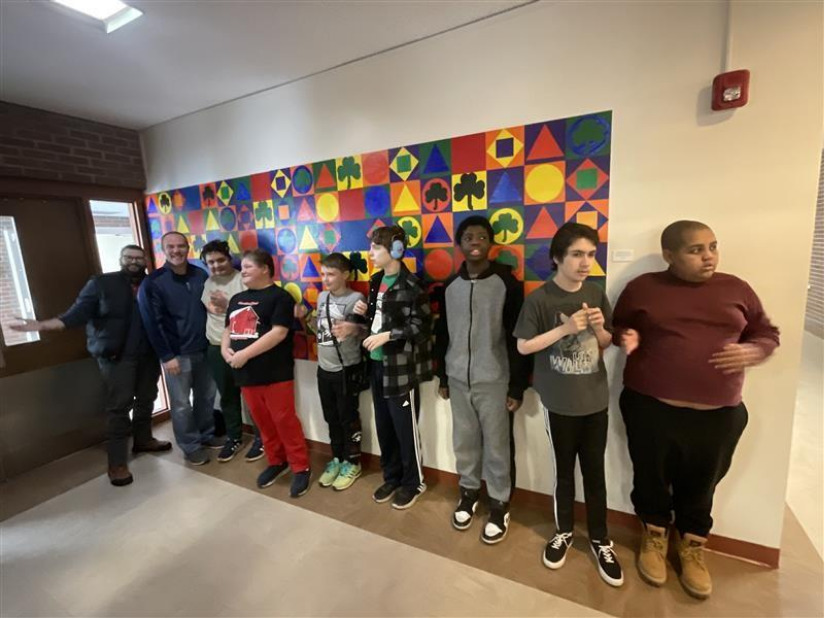
During fall 2025, the Elizabeth Lee Black School collaborated with Erie Arts & Culture on an Arist in Residence program featuring mural artist Steve Mik. Steve Mik is a local artist who has been painting murals for the last 15 years. He has a passion for working with community and inspiring people using public art. Working with four of our classrooms, Steve guided students in creating a symphony of color and geometry, a rhythmic medley of shapes that transforms a simple hallway into a gallery of imagination. Squares, circles, triangles, and clovers march in harmonious rows, each block a bold declaration of red, blue, yellow, and green. The repetition feels like a visual heartbeat—steady yet full of surprises—where familiar forms become playful patterns. An official unveiling of the mural occurred on December 16. Steve, along with members from Erie Arts & Culture, joined the celebration. The mural is a kaleidoscope of possibilities, inviting every passerby to pause and see the beauty in order, color, and joy.
Steve Mik, far left, poses in front of the newly unveiled mural on December 16 with teacher Robert Adams and his students who participated in the Artist in Residence program.
Former Graduates Who Are Going Places: Daniel Gillespie and Thomas Kopec
Recently, Daniel Gillespie, a former student with autism, reached out to share his achievements. Despite challenges, he and his brother David, who also has autism, persevered to lead fulfilling lives.
Daniel started receiving services from the Barber National Institute early on and developed strong skills in time management, communication, and critical thinking. After high school, he explored different jobs with the Office of Vocational Rehabilitation and worked in various fields before deciding to pursue college. He graduated from Mercyhurst in May 2024 with a bachelor’s degree in criminal justice and now works as a courtroom tipstaff, applying his education to assist judges and maintain order.
Daniel and his brother also launched the Brown Side of Autism blog to share their experiences as Black and Brown individuals with autism, raising awareness about both the challenges and strengths of people with autism. I’m proud of Daniel’s ongoing journey and all he continues to accomplish.
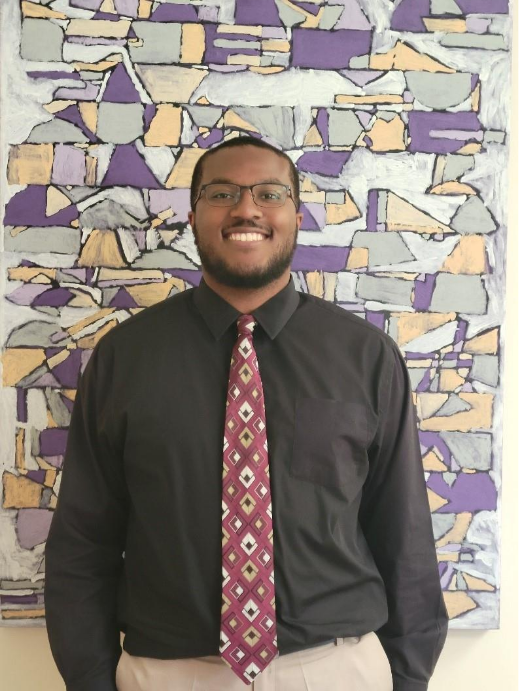
Daniel Gillespie
Thomas Kopec’s journey is a testament to perseverance, character, and the power of early support. A few weeks ago, he graduated from the University of Nevada, Las Vegas with a Bachelor of Science in Mathematics, earning cum laude honors with a 3.54 cumulative GPA—an achievement built on years of consistent effort and self-discipline. Throughout his studies, Thomas never needed prompting to complete homework or prepare for exams; his quiet drive and steady focus became hallmarks of his success. Just as notable as his academic credentials are the qualities that define him daily: humility, honesty, kindness, and a genuine warmth that makes him a joy to know.
This milestone also reflects a broader story of partnership and guidance. Beginning early as a three-year-old student in our autism program, Barber National Institute, Thomas and his family found a community that nurtured his growth. Thomas graduated from us as an elementary student and his family moved to Las Vegas.
As Thomas steps forward, his achievement stands not only as a personal triumph but as an inspiring reminder that when commitment, character, and the right supports come together, doors open—to learning, to opportunity, and to a bright future with possibility.
Autism spectrum disorder (ASD) isa neurodevelopmental conditionthat affects how a person interacts socially, communicates, and behaves. It is called a “spectrum” because symptoms and abilities vary widely from one individual to another. ASD is typically diagnosed in early childhood, though some individuals are diagnosed later in life. Causes are complex, involving genetic factors (which account for most of the risk), as well as possible environmental and biological influences.
A groundbreaking study published in Nature Genetics from July 2025 and reported by The Washington Post has identified four distinct autism subtypes, offering new insights into the complexity of autism spectrum disorder (ASD). Led by Princeton University and the Simons Foundation, the research analyzed genetic and behavioral data to better understand patterns within the spectrum. Here’s a summary of the four subtypes:
1. Social and Behavioral Challenges
This group represents about 37% of participants and is characterized by prominent social communication differences and repetitive behaviors, with developmental milestones like walking and first words generally on time. Individuals in this subtype often experience higher rates of ADHD, anxiety, depression, and OCD.
2. Mixed ASD with Developmental Delay
Comprising roughly 19% of the cohort, this subtype includes individuals with early motor or language delays. Social challenges and repetitive behaviors vary widely within the group. These individuals are more likely to carry inherited genetic variants rather than new (de novo) mutations and tend to have lower rates of anxiety or disruptive behaviors.
3. Moderate Challenges
About 34% of participants fall into this category, which features milder social and behavioral differences overall. Developmental milestones are typically on time, and psychiatric comorbidities are less common compared to other groups.
4. Broadly Affected
The smallest group, at 10%, faces more severe challenges across multiple domains, including social communication, repetitive behaviors, and cognitive impairment. This subtype also shows higher rates of psychiatric conditions such as anxiety and mood disorders and is enriched for de novo genetic mutations.
Why This Matters
These findings underscore the diversity within the autism spectrum and highlight the importance of personalized approaches to support and intervention. Understanding these subtypes can help clinicians, educators, and families tailor strategies that meet individual needs.
Cindy Priester congratulates student Zemir, a 2025 graduate of the Elizabeth Lee Black School.
Last Friday was bittersweet for me and many others throughout the Elizabeth Lee Black School and the Barber National Institute. I say goodbye to Cindy Priester, Director of Children & Youth, as she retired from the organization after serving over 40 years. She wore many hats and took on many roles during her tenure, leading by example, inspiring others, championing meaningful change and fostering collaboration.
I’d like to share some of Cindy’s thoughts on what she learned during her time at the Elizabeth Lee Black School.
Every day is a fresh start – so don’t panic…frolic!
Dream big, support each other, and never forget to smile.
The simple joys – like dancing in the gym or reading to a student, are often the most magical.
Imagination is everything. Be thankful, stay curious, and always listen.
Learn something new, explore the unknown, and yes – try a new hairstyle just because!
Be unique. Be different. Be open to new ideas.
Celebrate the small steps, birthdays, and breakthroughs.
Make something out of nothing.
Sing the clean-up song and the days-of-the-week song like it’s your anthem.
Be content with the chaos, eat on the run, and embrace the balance of working hard and playing harder.
The Elizabeth Lee Black School has taught me that joy lives in the little things…
…and that every moment is a chance to grow, laugh, and love what you do.
I am deeply grateful for Cindy’s unwavering dedication and commitment. Throughout her remarkable career at the Barber National Institute, she has made a lasting impact on countless students, families, and the entire community. Even in retirement, Cindy’s passion endures—she will continue to volunteer in our school library, and her presence will always be cherished as an integral part of the Barber National Institute family!
At the Elizabeth Lee Black School (ELBS), Mental Health Workers (MHWs) are part of a dynamic, collaborative team dedicated to supporting children with unique needs. This role offers a deep sense of accomplishment as you help some of the most vulnerable students succeed.
The students in the ELBS Mental Health Program face a complex combination of intellectual disabilities and mental health challenges. These needs often make learning and engaging with their environment difficult. As an MHW, you play a vital role in helping students develop new skills, build independence, and experience a more meaningful school day.
Creating Student Success
MHWs engage students in therapeutic activities that foster social, coping, and academic skills. By promoting independence and tolerance of their environment, students can become active members of their classroom community. This position is essential to the mental health classroom and treatment team, working closely with psychiatrists, families, and behavioral staff to create strategies that drive student success.
Collaborative Classroom Team
Our mental health classrooms maintain a high staff-to-student ratio, ensuring strong support and teamwork. MHWs collaborate with teachers, classroom staff, and therapy professionals to deliver the best possible programming for students. This partnership creates a fulfilling workday where you witness students grow and thrive.
Many of our MHWs say, “I just love my kids,” reflecting the pride and joy they feel in making a difference every day at the Barber National Institute.
For more than sixty years, the Barber Christmas Ball has been one of Erie’s most beloved holiday traditions—a night where elegance meets purpose. This year’s theme, A Colorful Christmas, promises an evening filled with vibrant décor, lively music, and the warmth of community spirit. Courtney and Andrew Doyle, this year’s chair couple, are excited to carry on this tradition. As longtime supporters of the Barber National Institute, Courtney and Andrew share a deep family commitment to Erie.
On Saturday, December 13, 2025, the Bayfront Convention Center will transform into a festive wonderland. Guests will enjoy hors d’oeuvres, desserts, and two complimentary cocktails as they mingle and celebrate the season. Live entertainment by Stiletto Fire will keep the dance floor alive from 8:00 p.m. until midnight, ensuring the night sparkles with energy. Black tie attire is optional, and valet parking makes arriving in style effortless.
But the Christmas Ball is more than a glamorous evening—it’s a celebration with impact. Proceeds benefit the Barber National Institute’s Strengthening Foundations: Home Renovation Campaign, a $1 million initiative to create safe, accessible homes for children and adults with intellectual disabilities and autism. Every ticket purchased and every sponsorship secured helps build brighter futures.
The tradition doesn’t end when the music fades. The following day, the ballroom hosts the Adult Services Christmas Dance, giving individuals served by the Barber National Institute their own magical holiday experience. It’s a beautiful reminder that this event is rooted in inclusion and the opportunity for individuals to come together for a time of fun and cherished memories.
We extend our heartfelt thanks to everyone who has supported the Barber Christmas Ball and to all our dedicated friends who stand with the Barber National Institute year-round. Your generosity and commitment make a meaningful difference in the lives of those we serve—thank you for being part of our community.
One of the most exciting initiatives at the Elizabeth Lee Black School is its adaptive kitchen—a fully accessible culinary learning space designed to empower students of all abilities. What makes this kitchen truly unique? It’s equipped almost entirely with appliances from the Beautiful® by Drew line, created by Drew Barrymore.
While these appliances were originally designed with ergonomic considerations for women, they also feature thoughtful adaptations that meet the diverse needs of our students.
“Many of these appliances have a large, topple-free base, allowing students to pull on them without moving the appliance or risking injury. All touchpoints are highlighted in gold, guiding them to learn appliance safety,” explains Cindy Priester, Director of Children and Youth at Barber National Institute. “The appliances are easy to use with simple instructions that aid comprehension. Plus, the ergonomic handles fit comfortably in the student’s hand regardless of their fine motor skills.”
More Than a Kitchen—A Gateway to Independence
This forward-thinking space opened earlier this year thanks to funding from the Edith L. Trees Charitable Trust and proceeds from Barber National Institute’s 2024 Ladies Only Luncheon. Its purpose? To equip students with essential life skills like safe food handling, proper hygiene, and hands-on cooking techniques.
“It’s not just a kitchen—it’s a gateway to independence, confidence, and community inclusion,” Cindy shares. “Imagine students learning to sort utensils, master basic appliances, and prepare nutritious meals—all while cultivating a lifelong curiosity and love of cooking.”
The curriculum starts with foundational skills such as filling a cup of water, identifying kitchen items, and practicing hygiene. Over time, students progress to preparing simple meals. The results? Remarkable success stories—making this one of the school’s most impactful programs to date.
Help Us Bring This Story to National Attention
We believe this story deserves the spotlight—and you can help make that happen! Social media has the power to amplify voices and connect with people who care, including Drew Barrymore herself.
Here’s how you can help:
Tag: @DrewBarrymore and @DrewBarrymoreShow
Use hashtags: #BeautifulImpact and #DrewBarrymoreShow
Share this story: Every like, comment, and share increases the chance that Drew and her team will see how much this initiative matters.
Together, we can shine a national spotlight on the incredible students at Elizabeth Lee Black School and the “BEAUTIFUL” kitchen that’s transforming lives.
We are in the countdown for the 2025 Ladies Only Luncheon…only 24 days to go!
This event began 23 years ago when the mother of one of our students came to me and told me that she and her friends had led a fund raiser for her daughter’s school in Boston. Could they do something similar for our school? Of course, I immediately said “YES”, and the rest is history! We had 150 women our first year and by year 4, a sold-out crowd and for every year thereafter. For many of the women, it has become a Holiday tradition.
Each year, we have designated a specific project. Last year, it was to build an adaptive kitchen for our students. This year, the proceeds will benefit the Sensory Experience Development Project — a transformative effort to create inclusive, interactive spaces that stimulate and support the senses in safe, meaningful ways. We believe that every student deserves the opportunity to explore, engage, and thrive in an environment that nurtures his or her unique sensory needs. Whether it is a tactile garden for individuals with visual impairments, a swing designed for students who are wheelchair bound, or a multi-sensory, nature-based play zone, this project is designed to foster connection, creativity, and learning for all.
We have a committed group of women who, as the Planning Committee, are essential to its success! I would like to acknowledge these women, some of whom have been working on the event for 23 years. These incredible women are:
Step aboard the Neighborhood Trolley—a vibrant homage to the whimsical world of Mister Rogers’ Neighborhood. This colorful creation features cherished characters, lively cityscapes, and the boundless magic of imagination. Recently, it was proudly showcased at Fred Rogers Productions in Pittsburgh during the advisory council meeting.
It’s a true honor to serve on the PNC Grow Up Great Advisory Council, a group deeply committed to shaping the future of early childhood education. Last week, I had the privilege of attending the Fall 2025 Council Meeting, and I left inspired and informed.
Since its founding in 2004, PNC Grow Up Great has been a transformative force in preparing children—from birth to age five—for success in both school and life. The initiative has invested:
$500 million in multi-year bilingual education programs
$270 million in grants to nonprofits advancing high-quality early childhood education
Together, these efforts have supported over 10 million children nationwide.
A key focus of our recent meeting was the emerging role of Artificial Intelligence (AI) in the lives of young children. While AI’s impact on the workforce and older students is widely discussed, its influence on early childhood development is just beginning to surface.
Dr. Dana Suskind led a thought-provoking session on how AI devices may soon replace tablets and television as digital companions for children. With 75% of three-year-olds already using tablets, the implications are profound. During the first three years of life, a child’s brain grows to 80% of its adult size, making this a critical window for development. Rich, responsive conversations with caregivers are essential for language acquisition, emotional growth, and social engagement.
Yet, interactive AI bots and toys are on the horizon. OpenAI’s recent partnership with Mattel aims to introduce age-appropriate AI toys to the market. Dr. Suskind cautioned, “We still don’t fully understand foundational brain development. Introducing young brains to responsive AI may alter them in fundamental ways we cannot yet anticipate.”
AI is here to stay—but so is our responsibility to ensure it enhances, rather than hinders, the developmental journey of our youngest learners. As we move forward, we must continue asking the hard questions and seeking evidence-based answers to protect and empower the next generation.